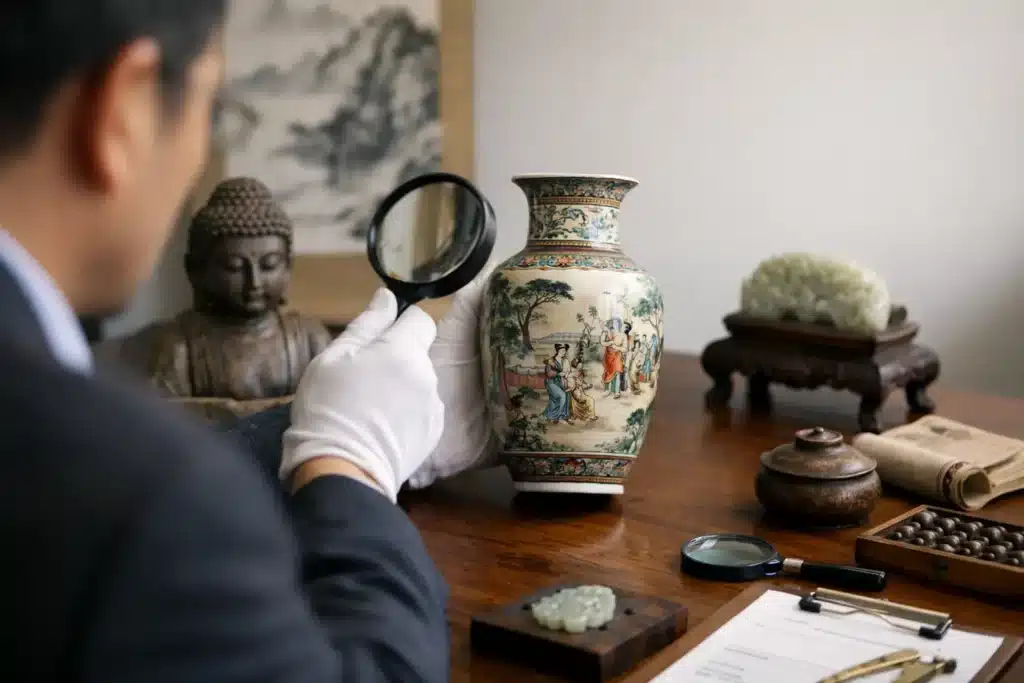
A porcelain vase can look centuries old and still be a later decorative reproduction. A small bronze figure with an unassuming surface may be an early casting with serious collector interest. That difference is why an Asian art appraisal begins with identification, not a quick price opinion. Before discussing value, an appraiser must determine what an object is, where and when it was made, how it was used, and whether its condition supports the conclusion.
For families handling an estate, collectors refining a collection, or fiduciaries responsible for personal property, this work can feel complicated. Asian art encompasses a broad range of countries, traditions, materials, and markets. Chinese porcelain, Japanese woodblock prints, Korean ceramics, Indian paintings, Southeast Asian bronzes, Tibetan religious objects, and Japanese screens do not follow one set of valuation rules. Each category has its own history, specialists, buyer base, and practical concerns.
Charles Pharr Jr., ISA Certified Appraiser of Personal Property (CAPP), provides professional personal property appraisal services through Four Seasons Auction Gallery in Gainesville, Georgia. With more than two decades of experience in antiques, fine art, and personal property, he assists collectors, families, executors, trustees, and attorneys with appraisal assignments for estate tax, insurance, charitable donation, equitable distribution, and other appropriate purposes. Appraisal assignments are developed and reported in accordance with applicable USPAP requirements and the ethical obligations of the International Society of Appraisers.
What an Asian Art Appraisal Actually Evaluates
A professional appraisal is an independent, written opinion of value prepared for a defined purpose and effective date. It is not simply an opinion about whether an item is attractive or likely to sell. The intended use matters. An appraisal for estate administration may require a different value conclusion and reporting approach than one prepared for insurance coverage, charitable donation, or equitable distribution.
The first task is careful object identification. An appraiser considers the material, construction, decoration, marks, inscriptions, dimensions, wear patterns, and any labels or old collection information. A Chinese porcelain bowl, for example, may be examined for its paste, glaze, foot rim, painted decoration, reign mark, and firing characteristics. A Japanese print may require attention to the artist, edition, publisher, paper, impressions, margins, and later restorations.
Provenance, or documented ownership history, can be useful, particularly when it connects an object to a known collection, dealer, exhibition, or publication. It is not required for every object to have value, but strong documentation can clarify attribution and give buyers confidence. Conversely, a verbal family story should be recorded respectfully but treated as unverified unless supporting records are available.
Condition is equally important. A repair, restored area, drilled hole, replaced element, shortened panel, or altered surface can substantially affect value. The impact depends on the object. A minor rim chip on a common export porcelain plate may be expected in the market. The same damage to a rare early bowl, or repainting on an important screen, may materially change collector interest. Honest condition reporting is not a formality. It is central to credible valuation and successful marketing.
Why Similar-Looking Objects Can Have Very Different Values
Age alone does not establish value. Neither does a mark, a signature, or an association with a well-known dynasty. Marks can be contemporary, later honorific marks, or reproductions. Signatures on paintings and prints require context. Some objects were made for imperial use, some for domestic use, some for export, and others as later revival pieces. A sound valuation considers the whole object rather than relying on one promising detail.
Rarity must also be understood in relation to demand. A scarce object without an active collector market may bring less than a more available work by a sought-after artist or maker. Market preferences shift as scholarship, exhibitions, collecting habits, and international participation change. Fine Chinese ceramics, Japanese prints in strong condition, scholar’s objects, cloisonné, Korean ceramics, and selected Indian and Himalayan works can attract considerable interest, but demand is specific to quality, category, and price level.
Scale and presentation matter, too. A large, well-preserved Japanese folding screen may appeal to decorators and collectors, while a single damaged panel may have a narrower market. A modestly sized jade carving with excellent workmanship and an old collection history can be more desirable than a larger but later example. The right comparison is not the nearest object in a search result. It is a genuinely comparable object sold in a relevant market under similar conditions.
Formal Appraisal, Auction Estimate, and Market Opinion
These terms are often used interchangeably, but they serve different purposes. A formal professional appraisal is a researched report that identifies the property, states the assignment’s intended use, defines the value type, establishes an effective date, explains the scope of work, and provides support for the value conclusion.
An auction estimate is a pre-sale range developed to guide consignors and bidders. It reflects what the auction house believes an item may reasonably bring at auction, considering current demand, condition, sale timing, venue, and comparable auction activity. It is a useful market tool, but it is not equivalent to a formal appraisal and should not be used as one for insurance, tax, or legal purposes.
An initial auction consultation can help owners decide whether Asian art or antiques may be suitable for consignment or whether further research is appropriate. Such consultations are distinct from formal appraisal assignments. When an opinion of value is developed for a specific intended use, the nature of the service and applicable appraisal obligations must be properly established. Formal appraisals may be necessary for estate tax reporting, insurance, charitable donations, equitable distribution, or other purposes, depending on the circumstances and applicable requirements. Clients should consult their legal, tax, or insurance advisers to determine the documentation needed.
Preparing Property for an Appraisal Review
Good photographs and basic information can make an initial review more productive. Include overall views, close-ups of marks or signatures, dimensions, and images of damage, repairs, or labels. Photographing the underside of ceramics and the back of paintings is often as useful as photographing the front. If there are receipts, prior appraisals, auction catalogs, correspondence, or family records, keep them together.
Do not attempt aggressive cleaning before an inspection. Polishing metal, washing painted surfaces, removing patina, or using household adhesive on a break can reduce value or obscure evidence needed for identification. Dust removal with care may be reasonable, but uncertain objects are best left in their current state until they can be evaluated.
For estate representatives, organization is especially helpful. Group objects by room or category, but do not assume that the most decorative pieces are the only items worth reviewing. A small box of seals, brush pots, tea wares, netsuke, prints, or old photographs may contain information that helps establish a collection’s history. At the same time, a thorough review should remain practical. Not every item requires a separate formal appraisal report.
When Specialist Input Is Needed
Asian art is a broad field, and responsible appraisal practice recognizes the limits of any one person’s expertise. Some assignments may require consultation with a category specialist, scientific examination, translation of inscriptions, or additional provenance research. This is especially true for works with potentially significant age, unusual materials, religious or archaeological considerations, or complex attribution questions.
An appraiser should be candid about the level of certainty available from visual examination and the records provided. Authentication is not always possible from photographs alone, and even an in-person review may identify questions that warrant further study. That is not a weakness in the process. It is an ethical approach to property that may have historical, cultural, and financial significance.
Asian Art Appraisals and Auction Consignments in Georgia and Nationwide
Four Seasons Auction Gallery, headquartered in Gainesville, Georgia, works with collectors, families, executors, trustees, and estate representatives seeking professional appraisal services or auction consignment opportunities for Chinese antiques, Japanese art, Asian ceramics, bronzes, decorative arts, and other collectible property.
Professional personal property appraisal assignments are available throughout North Georgia, Metro Atlanta, and other locations nationwide by arrangement. Charles Pharr Jr., ISA CAPP, develops independent opinions of value for appropriate appraisal assignments in accordance with applicable USPAP requirements and ISA ethical obligations.
For owners considering selling Asian antiques or fine art, Four Seasons Auction Gallery welcomes suitable consignment inquiries from throughout the United States and internationally.
Accepted consignments are professionally cataloged and marketed through established online auction platforms, including LiveAuctioneers, Invaluable, and AuctionZip. These platforms provide opportunities for collectors and buyers beyond the local market to participate in bidding.
Need a professional Asian art or antiques appraisal?
Learn about our professional appraisal services
Considering selling Chinese antiques, Japanese art, or other Asian collectibles?
Contact Four Seasons Auction Gallery about auction consignment
Whether the property involves a single important object or an extensive collection, the first step is careful identification, appropriate research, and selecting the professional service that meets the client’s needs.
The most useful first step is not to assume an object’s value from its appearance, a family recollection, or an online listing. Preserve the object, gather its history, and seek an informed review with a clear purpose in mind. That approach gives families, collectors, and fiduciaries a sound basis for the next decision.