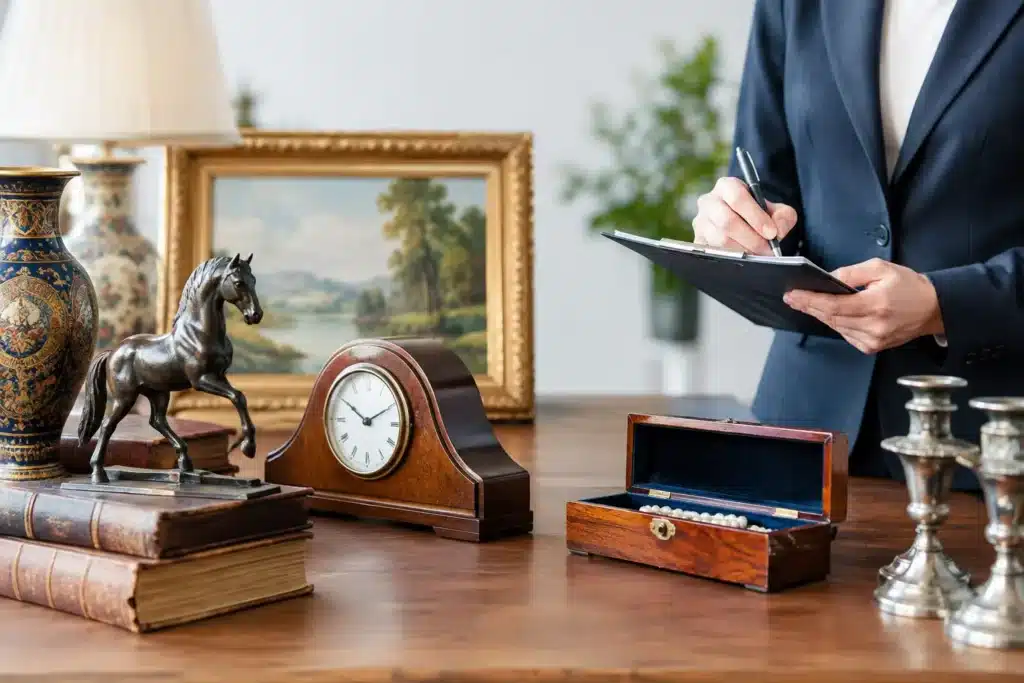
A family home can hold several generations of decisions: furniture that has been used daily, paintings no one has researched, drawers full of silver, and boxes whose contents are still unknown. Knowing how to prepare an estate auction begins with slowing down long enough to make sound decisions. The goal is not simply to clear a house. It is to identify property accurately, preserve what matters to the family, and place saleable items before the buyers most likely to value them.
An estate auction can be an efficient and appropriate solution for a complete household, a carefully assembled collection, or selected objects from an estate. Preparation has a direct effect on the quality of the sale process, the accuracy of descriptions, and the market response.
Start Before Anything Is Removed
The most common early mistake is giving away, donating, discarding, or placing items in a dumpster before the property has been reviewed. A piece that appears ordinary may have value because of its maker, age, material, condition, provenance, or current collector demand. Conversely, a large or old object is not automatically valuable. Careful identification is more useful than assumptions in either direction.
Before moving property, walk through the residence with the executor, trustee, family representative, or other decision-maker. Take broad photographs of each room, then closer photographs of shelves, closets, storage areas, the attic, garage, and outbuildings. Open drawers, cabinets, trunks, and boxes. Small but significant property is often found among household contents rather than displayed prominently.
Set aside personal documents, family photographs, correspondence, military records, passports, financial papers, and prescription medications. These items generally should not enter the auction process. The same is true of items a family has agreed to retain. Reaching that agreement early can prevent difficult conversations after a sale has been planned.
Gather the Information That Gives Property Context
Provenance means an object’s history of ownership, and it can matter greatly for certain categories. A receipt, gallery label, old photograph, exhibition catalog, artist correspondence, or previous appraisal may help establish what an item is and where it came from. Keep related paperwork with the object whenever possible.
Look especially for records connected to fine art, antiques, jewelry, watches, coins, sterling silver, Asian art, designer furniture, Persian rugs, and specialty collections. A signed painting without documentation may still be marketable, but supporting material can assist research and strengthen buyer confidence. For furniture, check the back, underside, and interiors of drawers for labels, stamps, and maker marks. For silver, inspect the reverse for hallmarks. For rugs, photograph the front, back, corners, and any labels.
Do not attempt to clean, polish, repair, refinish, or restring property before an auction professional has reviewed it. Polishing can remove desirable patina from silver or metal objects. Refinishing may reduce interest in period furniture. An amateur repair to a painting, porcelain object, clock, or watch can create a more costly condition issue than the original damage.
Separate Family Decisions From Sale Decisions
Estate work can bring practical and emotional concerns together. It helps to establish one person or a small group with authority to make decisions and communicate with the auction company. When several heirs are involved, a written list of retained items and agreed instructions can avoid confusion.
If distribution among heirs is part of the estate plan, that process should be addressed before property is consigned. An auction house can sell property, but it should not be placed in the middle of an unresolved family disagreement. Executors, trustees, and attorneys may also need to confirm what authority is required under the estate documents or applicable probate process.
For some estates, a sale is only one part of the larger assignment. Personal-property appraisals may be needed for estate administration, equitable distribution, insurance, charitable donation, or another stated intended use. A formal appraisal is a written opinion of value prepared for a specific purpose and effective date. It is not the same as an auction estimate.
An auction estimate is a market-based range intended to guide sale expectations for an object offered at auction. It reflects the likely auction market under the proposed conditions, not a guarantee of price or an insurance replacement value. When jewelry appraisal is required, the assignment should be handled by an appropriately qualified certified jewelry appraiser.
How to Prepare an Estate Auction Inventory
A room-by-room inventory gives everyone a clearer picture of the estate and helps an auction professional determine the appropriate sales strategy. It does not need to be a formal appraisal report. A practical spreadsheet or notebook can record the room, item description, known maker or artist, dimensions, visible condition, and any accompanying records.
Photographs should be clear and well lit. Include signatures, labels, maker marks, serial numbers, damage, and identifying details. For a collection of coins, jewelry, or other small valuables, avoid posting detailed images publicly until you have spoken with the auction company and considered security.
An inventory also helps determine whether an estate contains property appropriate for a professionally cataloged auction. Significant collections of fine art, antiques, sterling silver, estate jewelry, desirable designer furniture, Asian art, and other valuable personal property may benefit from individual catalog entries, specialized research, and national or international online bidding exposure. Ordinary household furnishings and lower-value contents may be better suited to an estate sale, donation, or another method of disposition. Four Seasons Auction Gallery evaluates potential estate consignments based on the quality, desirability, condition, and marketability of the property rather than simply the quantity of household contents.
Ask for a Professional On-Site Review
A knowledgeable auction professional can identify categories that warrant further attention and explain what is likely to sell well in the current market. This review should include the property itself, not merely a handful of photographs, when the estate is substantial. Scale, construction, condition, and context are often difficult to judge from images alone.
Ask how the company evaluates property, whether items will be photographed and cataloged individually, where bidders will be reached, and how reserves are handled. A reserve is the confidential minimum price below which an item will not sell. Reserves can be appropriate for selected property, but unrealistic reserves can discourage bidding or leave items unsold. An experienced auctioneer should give candid guidance rather than promise a result the market may not support.
It is also reasonable to ask about commissions, pickup procedures, insurance while property is in the company’s care, transportation, and the expected timeline from consignment through settlement. Clear written terms protect both the consignor and the auction company.
Prepare the House for Efficient Removal
Once a plan is in place, make access easier and safer. Keep pathways clear, identify stairs or narrow doorways, and disclose known concerns such as water damage, fragile flooring, limited parking, pets, or gated access. If the estate includes large furniture, rugs, sculpture, safes, or other heavy property, removal may require specialized handling.
Do not combine saleable property with trash during the final cleanout. Create clearly marked areas for retained family items, documents, donations, and auction property. This simple step reduces the risk of an important object being removed by mistake.
Security deserves attention as well. Keep jewelry, coins, precious metals, firearms, and other portable valuables secured until collection arrangements are confirmed. Firearms may require particular handling and compliance considerations. Avoid allowing unaccompanied visitors or informal buyers to walk through the home while the estate is being sorted.
Allow Time for Research and Presentation
A well-prepared sale is rarely created in a day. Cataloging may involve measuring furniture, inspecting condition, researching artists and makers, identifying marks, photographing objects, writing descriptions, and selecting the correct auction format. Good presentation gives qualified bidders the information they need to bid with confidence.
Timing also matters. An estate with broad household contents may move relatively quickly, while a significant collection can benefit from additional research and focused marketing. The best approach balances the need to settle the estate efficiently with the need to present property properly. Rushing can mean missed information, weak descriptions, and less effective market placement.
Four Seasons Auction Gallery, based in Gainesville, Georgia, works with families, executors, trustees, attorneys, and collectors throughout the United States and welcomes suitable auction consignments nationally and internationally. Estate collections and individual objects are evaluated according to their marketability, condition, and suitability for auction. Whether the property consists of a significant collection or selected valuable items from an estate, the process begins with understanding what is present, what documentation is available, and the estate’s objectives.
Knowing how to prepare an estate auction begins with identifying valuable property before it is distributed, donated, or discarded. Careful preparation, accurate documentation, and appropriate market exposure can help families and estate representatives make informed decisions.
If you are responsible for an estate containing fine art, antiques, sterling silver, estate jewelry, important collections, or other desirable personal property, contact Four Seasons Auction Gallery to discuss potential auction consignment opportunities. Suitable consignments are considered from throughout the United States and internationally.
For estate representatives requiring an independent opinion of Fair Market Value for estate tax reporting, equitable distribution, or other professional purposes, Charles Pharr Jr., ISA CAPP, also provides personal property appraisal services throughout the United States. Formal appraisals are separate assignments from auction consignment evaluations.