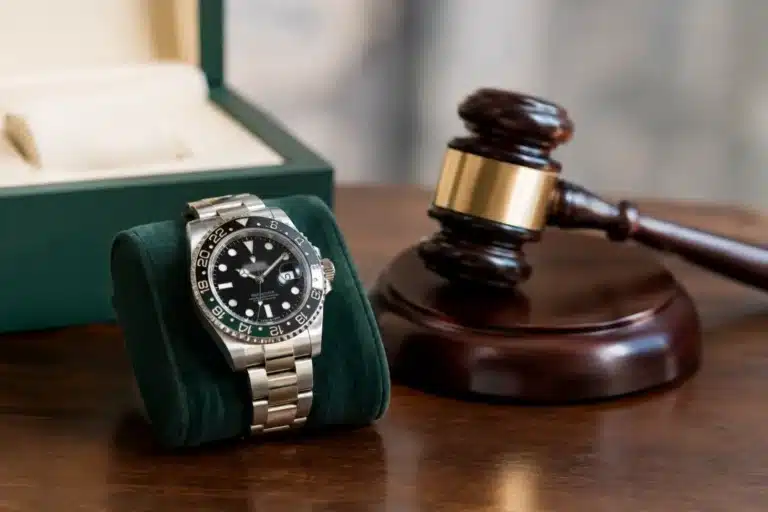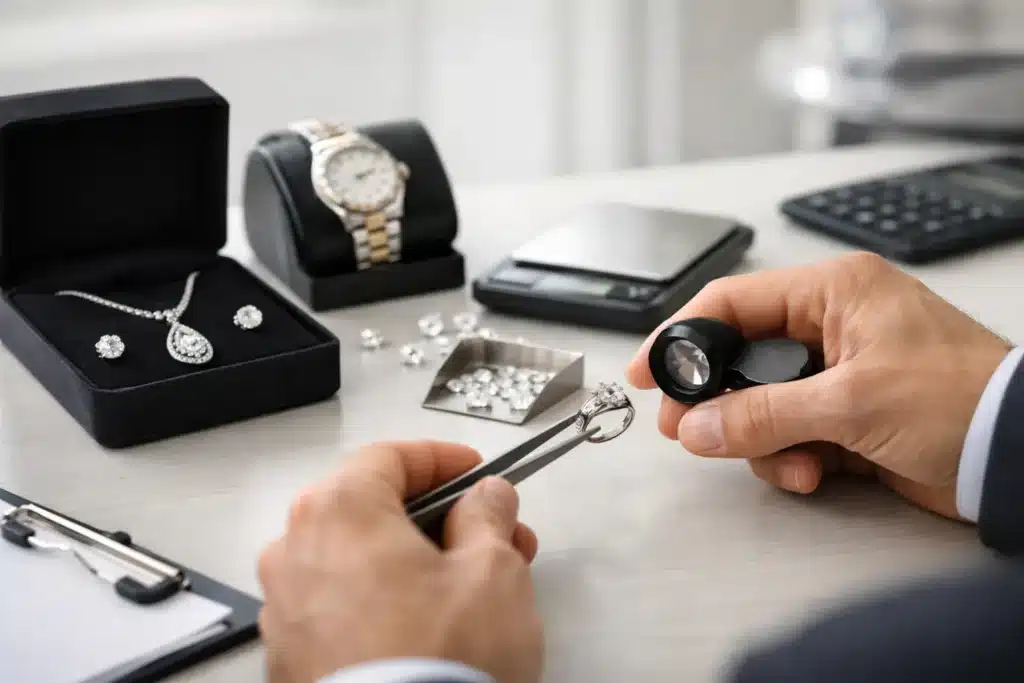
A diamond ring may have been purchased years ago, inherited from a parent, or tucked away in a safe after a special occasion. If it is lost, stolen, or damaged, a receipt alone may not show what it would cost to replace the piece now. An insurance appraisal for jewelry provides the detailed documentation an insurer may need to schedule valuable jewelry properly and settle a covered claim fairly.
Jewelry is personal property, but it is not all valued in the same way. A formal appraisal prepared for insurance is different from an auction estimate, a resale offer, or a casual opinion of value. Knowing the difference before a loss occurs can prevent frustrating surprises later.
Four Seasons Auction Gallery, headquartered in Gainesville, Georgia, specializes in the auction consignment of estate jewelry, gold, diamonds, antique jewelry, and other desirable personal property. For jewelry accepted for auction, we work with a qualified professional jewelry appraiser who assists with identification, authentication, and accurate catalog descriptions. Although Four Seasons does not provide formal jewelry insurance appraisals, we recognize the importance of professional jewelry expertise when preparing valuable pieces for auction. We welcome suitable jewelry consignment inquiries from throughout the United States and internationally.
What an insurance appraisal for jewelry is designed to do
An insurance appraisal generally establishes a replacement value for a specific piece of jewelry as of a stated effective date. The intended use is insurance coverage, often through a scheduled personal-property endorsement or floater added to a homeowners, renters, or valuable-articles policy.
The report should identify the item carefully enough that there is little question about what was insured. For a diamond engagement ring, that may include the metal type, mounting style, diamond shape and measurements, estimated carat weight, color and clarity grades, side stones, hallmarks, and condition. A fine watch may require the maker, model, reference number, movement, case material, bracelet details, serial number when available, and photographs.
The appraiser then develops an opinion of the appropriate replacement value. In many cases, that reflects the cost to obtain a comparable item in the relevant retail market, rather than what the piece might bring at auction or from a jewelry buyer. Those are different markets with different assumptions.
Why the value on an old receipt may not be enough
A receipt establishes what someone paid at a particular place and time. It does not necessarily account for changes in metal prices, diamond and colored-stone markets, manufacturing costs, brand pricing, or the availability of comparable materials.
This matters with both high-value and modest pieces. Gold jewelry can be affected by changes in precious-metal prices. Vintage jewelry may be difficult to duplicate using current materials and workmanship. A designer piece may carry value related to its maker, condition, original components, and market availability. Conversely, a value stated years ago may be higher than current replacement needs in a category that has softened.
Insurance coverage should not be treated as a number to make as large as possible. Overinsuring can mean paying unnecessary premiums, while underinsuring can leave an owner unable to replace a meaningful item with a comparable one. A credible appraisal explains the property and supports a value appropriate to its assignment.
What a qualified jewelry appraiser should examine
A proper jewelry appraisal is based on more than a quick look at a ring under a counter light. The extent of examination depends on the item and the scope of work, but the appraiser may inspect gemstones with appropriate instruments, assess metals and marks, review workmanship and condition, measure stones, and identify signs of repair, alteration, or replacement components.
For diamonds and colored gemstones, accurate identification can materially affect value. Natural diamonds, laboratory-grown diamonds, treated stones, synthetic gems, and simulants are not interchangeable. A sapphire that appears blue may require further examination to determine whether it is natural, laboratory-created, heated, or otherwise treated. An appraisal should not make assumptions where additional testing or a gemological laboratory report is warranted.
Documentation can be especially valuable for jewelry with a significant center stone, signed maker, or unusual provenance. Existing grading reports, original purchase paperwork, prior appraisals, repair records, and clear photographs may help the appraiser understand the item. They do not eliminate the need for an independent current examination.
Replacement value, auction value, and estate value are not the same
The purpose of an appraisal controls the definition of value. This is one of the most important concepts for owners, families, attorneys, and fiduciaries managing jewelry.
A replacement-value appraisal for insurance asks what it would reasonably cost to replace the item with a comparable one in the appropriate retail market. An auction estimate is a pre-sale range based on what knowledgeable buyers may be expected to pay in a competitive auction setting, subject to condition, demand, timing, and buyer interest. A fair market value appraisal for an estate or charitable contribution has its own definition and methodology.
Consider an 18-karat gold and diamond bracelet. Its insurance replacement value might reflect the cost of obtaining a comparable bracelet through an appropriate retail source. Its auction estimate may be lower because auction buyers expect market-driven pricing and because commissions, presentation, and the available buyer pool influence a sale. Neither figure is automatically wrong. They answer different questions.
An auction estimate should not be confused with a formal jewelry insurance appraisal. Four Seasons Auction Gallery evaluates jewelry for potential auction consignment and works with a qualified professional jewelry appraiser to assist with identification, authentication, and catalog descriptions of accepted jewelry. This specialist involvement supports the auction process but does not constitute a formal insurance appraisal report. Clients requiring an insurance replacement value appraisal should engage an appropriately qualified independent jewelry appraiser for that specific assignment.
When to update jewelry insurance documentation
There is no single update schedule that fits every collection. Many owners review appraisals every three to five years, particularly for diamond jewelry, important colored stones, signed pieces, fine watches, and items with substantial gold or platinum content. Your insurer may also have its own requirements.
An earlier update may be sensible after a major market movement, a significant repair or redesign, the purchase of a new item, or the discovery that an inherited piece is more substantial than the family understood. If a ring has been reset, stones have been added or replaced, or a watch has received a valuable original accessory, the existing report may no longer accurately describe it.
Jewelry inherited through an estate deserves particular attention. Families often have an outdated appraisal, a handwritten note, or no paperwork at all. Before dividing property, selling pieces, or adding them to insurance coverage, it helps to identify what is actually present and determine which valuation assignment is needed. Insurance, estate administration, equitable distribution, and sale are separate purposes.
Preparing for the appraisal appointment
Owners can make the process more efficient by gathering related records in advance. Bring purchase invoices, previous appraisal reports, diamond or gemstone grading reports, warranties, repair receipts, certificates, and photographs. If the item is part of an estate, include any information about family history, makers, original owners, or prior sales.
Do not clean jewelry aggressively before the appointment. Ordinary surface dust is rarely a problem, while harsh cleaning can damage delicate settings, enamel, pearls, antique finishes, or patina. Let the appraiser see the item in its actual condition.
It is also helpful to confirm the intended use before work begins. Tell the appraiser whether the report is for insurance coverage, estate administration, a charitable donation, a division among heirs, or another purpose. A professionally prepared report should state the client, intended user when applicable, intended use, effective date, scope of work, relevant market, and value conclusion.
Questions to ask before engaging an appraiser
Credentials matter, but so does relevant experience. Ask whether the appraiser regularly handles jewelry and gemstones, what type of report will be provided, how the item will be examined, and whether the stated value is replacement value or another definition of value. It is reasonable to ask about fees, turnaround time, confidentiality, and whether the appraiser carries appropriate professional coverage.
Independence is also worth discussing. For an insurance assignment, many clients prefer an appraiser whose fee is not tied to the appraised value or to the sale of the jewelry. A fee structure based on time, research, and report preparation helps avoid the appearance that a higher value benefits the appraiser.
For unusual pieces, an appraiser may recommend additional steps. A valuable colored stone may need laboratory testing. A signed vintage jewel may require maker research. An antique watch may benefit from specialist consultation. These steps can add time and cost, but they may be appropriate when they materially improve identification and support for the value conclusion.
Selling Estate Jewelry Through Four Seasons Auction Gallery
Jewelry owners sometimes discover that an insurance replacement value differs substantially from what a piece may bring when sold.
An insurance appraisal addresses the cost of replacement under the applicable value definition, while an auction estimate considers the anticipated selling range in the auction marketplace.
For individuals considering selling estate jewelry, gold, diamond rings, antique jewelry, or signed designer pieces, Four Seasons Auction Gallery offers professional auction consignment services.
Jewelry accepted for auction benefits from specialist assistance with identification and catalog descriptions, professional photography, and marketing through established online auction platforms, including LiveAuctioneers, Invaluable, and AuctionZip.
These platforms provide opportunities for collectors, dealers, and other prospective buyers throughout the United States and internationally to participate in bidding.
Four Seasons Auction Gallery welcomes suitable jewelry consignments from across the United States and internationally. Acceptance is determined following review of the property, its condition, and current market demand.
Considering selling estate jewelry, gold, diamonds, or an inherited jewelry collection?
Contact Four Seasons Auction Gallery about jewelry consignment
Keep the report useful after it is completed
Once the appraisal is finished, provide the report to your insurance agent or carrier and confirm how the item is covered. Ask whether it needs to be scheduled separately, whether there is a deductible, and whether the policy offers replacement, repair, or cash-settlement options. Policy language, limits, exclusions, and claim procedures deserve the same attention as the appraisal itself.
Store a digital copy of the report and photographs in a secure location away from the jewelry. Keep original grading reports and receipts with your important records, not in the same box or safe compartment as the item if possible. If a loss occurs, those details can make the claim process far more manageable.
Fine jewelry often carries both sentimental and financial value. Whether the goal is to obtain appropriate insurance coverage or eventually sell an inherited collection, accurate identification and reliable documentation are important. Owners seeking insurance protection should consult a qualified jewelry appraiser and their insurance professional. Those considering selling desirable jewelry may contact Four Seasons Auction Gallery to discuss potential auction consignment opportunities.