A small box from a dresser drawer can hold more value than an entire room of ordinary furnishings. Gold jewelry, silver flatware, coin collections, watches, and even damaged pieces can all fall under the broad category of precious metals. Yet their value is rarely as simple as multiplying a weight by the day’s metal price.
For families settling an estate, collectors refining a collection, or owners considering a sale, the first task is to understand what the property actually is. A sterling tea service, a gold bracelet from a recognized maker, and a group of common silverplate serving pieces may look similar at a glance, but they belong in very different market categories.
What Counts as Precious Metals?
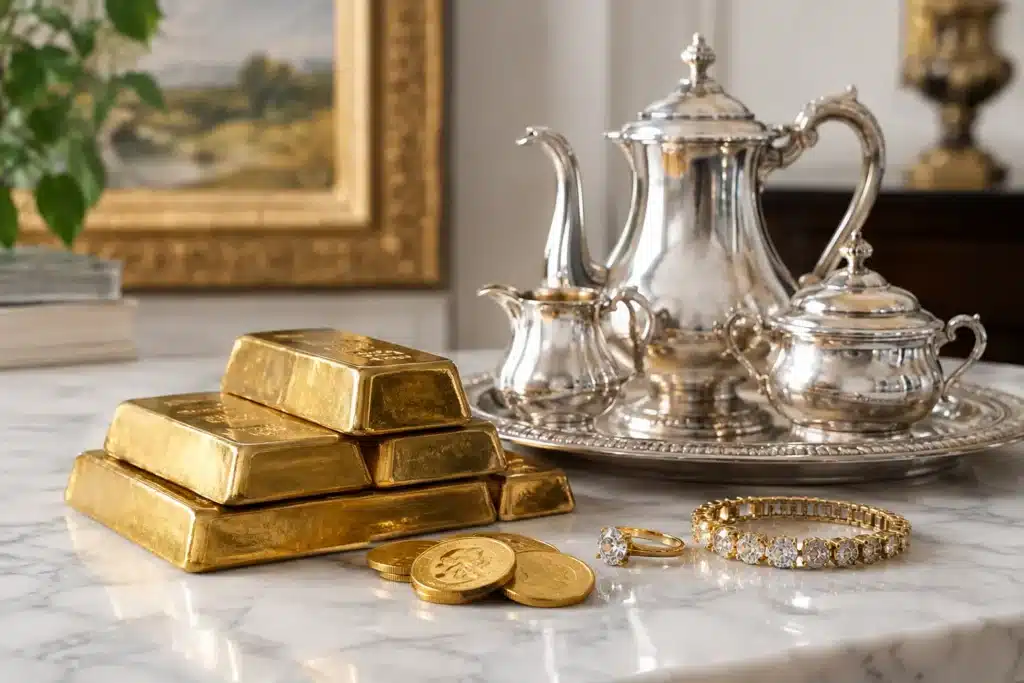
In estate and auction settings, precious metals most often include gold, silver, platinum, and sometimes palladium. They appear in jewelry, coins, bullion, flatware, hollowware, watches, decorative objects, medals, and religious or ceremonial items. The metal content matters, but it is only one part of a sound valuation or selling decision.
Gold is commonly marked by karat, such as 10K, 14K, 18K, or 24K. The karat indicates the proportion of pure gold in an alloy. A 14K ring, for example, contains 58.5 percent gold, while an 18K piece contains 75 percent gold. European jewelry may instead carry fineness marks such as 585 or 750.
Sterling silver is generally 92.5 percent silver and is often marked “Sterling,” “925,” or with a recognized maker’s hallmark. Silverplate is different. It has a thin layer of silver over a base metal and can be attractive or useful, particularly when made by notable firms, but it does not carry the same intrinsic metal value as sterling.
Platinum jewelry may be marked “Platinum,” “Pt,” “950 Pt,” or with another fineness mark. It is durable and often found in diamond rings and fine jewelry from the early 20th century onward. Its market value depends on weight and purity, but also on design, condition, gemstones, maker, and current demand.
Why Melt Value Is Not the Whole Story
The term “scrap” is often used loosely, sometimes before an item has been properly examined. Melt value generally refers to the intrinsic value of the recoverable precious-metal content, calculated using the item’s actual precious-metal weight, purity, and prevailing market price. The amount a seller receives may be lower after refining costs, processing expenses, and the buyer’s margin. Melt value can provide a useful reference point for broken chains, single earrings, damaged rings, or mismatched sterling flatware, but it does not necessarily reflect an item’s collectible or decorative value.
However, a piece may bring substantially more than melt value when it has collector, decorative, historical, or retail appeal. A signed gold brooch, an Art Deco platinum and diamond ring, a Cartier watch, or a complete set of sterling flatware by a desirable pattern can attract buyers who are purchasing more than metal content.
Coins require particularly careful treatment. Some gold and silver coins trade primarily on bullion value, while others carry collector premiums based on date, mint mark, rarity, grade, certification, and demand. Cleaning a coin, removing it from original packaging, or grouping it indiscriminately with common material can reduce its appeal to knowledgeable buyers.
The reverse can also be true. A heavy but unmarked chain may be best evaluated for metal content, while a fashionable but lightweight piece may have limited value beyond its components. The appropriate approach depends on the individual object, not a one-size-fits-all rule.
First Steps When You Find Gold, Silver, or Coins
Before sorting precious-metal items into “keep,” “sell,” or “scrap” piles, take a measured inventory. Set aside jewelry, coins, watches, sterling, and silverplate separately. Look for hallmarks, maker’s names, serial numbers, coin dates, and original boxes or paperwork. Photograph groups as they were found before distributing them among family members.
Avoid aggressive polishing or cleaning. Tarnish on sterling is usually manageable and is preferable to polish residue lodged in engraved details or hallmarks. Jewelry should not be scrubbed with abrasive products, and coins should not be cleaned at home. Ordinary cleaning can cause surface damage that is difficult or impossible to reverse.
It is also wise not to rely solely on household scales, magnet tests, or online price calculators. A magnet can identify some base metals, but it cannot establish gold purity, authenticate a coin, or determine whether a piece has collectible value. Professional evaluation may involve close inspection, hallmark research, weighing, and non-destructive metal testing where appropriate.
For an estate, retain any notes indicating where an item came from. Provenance does not automatically create value, but original purchase receipts, maker documentation, prior appraisals, coin certifications, and family history can help establish identity and support research.
Selling Precious Metals at Auction or for Metal Value
The best selling method depends on the property. Bullion, common precious-metal coins, broken jewelry, and damaged items may be well suited to a buyer focused on metal content. Fine jewelry, signed pieces, diamonds, collectible watches, unusual coins, and sterling from desirable makers may benefit from individual cataloging and competitive auction exposure.
Auction estimates should be based on relevant market evidence and current demand. They are a market opinion for a particular sale setting, not a guarantee of price and not a substitute for a formal appraisal. Metal markets can move quickly, while collector demand for jewelry, coins, and silver patterns can vary by category and condition.
Professional auction presentation can make a meaningful difference for appropriate property. Clear photography, accurate weights and dimensions, correct terminology, maker research, and condition descriptions give bidders the information they need to bid confidently. When the property warrants it, presenting it to a broad audience can create competition beyond the local market.
Four Seasons Auction Gallery markets appropriate consignments through LiveAuctioneers, Invaluable, and AuctionZip, reaching bidders locally, nationally, and internationally. That exposure is especially useful when a collection includes pieces that appeal to specialists, such as quality estate jewelry, better sterling, collectible coins, or designer watches.
Not every item needs to be sold one by one. A group of modest gold jewelry may be offered as a single lot, while a significant ring or a strong set of sterling may deserve its own catalog entry. Grouping decisions should balance likely buyer interest, selling costs, and the practical goal of obtaining a fair market result.
Jewelry, Watches, and Gemstones Need Separate Consideration
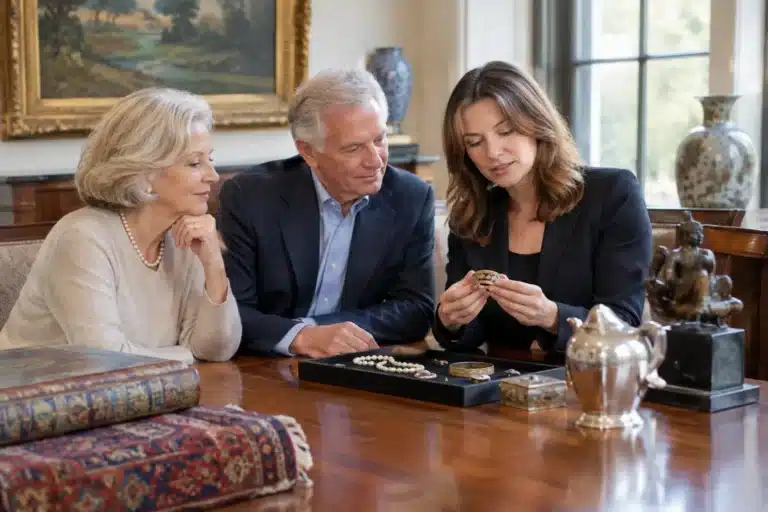
A gold setting and its gemstones should be evaluated together before a selling strategy is chosen. Diamonds, colored stones, pearls, and signed components can change the market significantly. A piece of jewelry may also have value as a complete period design that would be lost if treated solely as gold by weight.
Watches deserve similar care. A gold case does not automatically make a watch highly collectible, but maker, model, movement, condition, originality, and accessories can matter greatly. A vintage watch with its original box, papers, bracelet, and service history may interest a different buyer pool than a watch valued only for its case material.
When a formal jewelry appraisal is required for insurance, estate administration, equitable distribution, or another defined purpose, the assignment should be handled by an appropriately qualified certified jewelry appraiser. A formal jewelry appraisal involves developing an independent, impartial, and objective opinion of value for a defined intended use, with appropriate identification, research, analysis, and reporting. It is separate from an auction estimate prepared to guide a potential sale.
Estate Decisions Should Be Documented, Not Rushed
Precious-metal property can create understandable tension in an estate, especially when several heirs have personal attachments to the same pieces. Careful documentation helps. Record what was found, identify items that may require further research, and establish a clear process before objects are distributed or sold.
Executors, trustees, and attorneys may need different levels of documentation depending on the estate’s purpose. An auction consultation can help determine marketability and an appropriate sale plan. A formal appraisal may be needed when a documented valuation opinion is required for a legal, tax, insurance, donation, or distribution matter. These are related services, but they are not interchangeable.
The most useful next step is often a calm review of the property before decisions are made. Set aside the pieces that appear to be gold, sterling, platinum, coins, watches, or signed jewelry; preserve accompanying paperwork; and seek informed guidance before assuming that an item belongs in the melt pile. A careful look can protect both the financial value of the property and the family’s ability to make decisions with confidence.